Elemental sulfur: production, quality and international trade guide
A specification-led guide from H₂S recovery and solidification to representative sampling, safe handling and a workable international offer.
20 min read · Technical review · 9 September 2026Download the complete Persian publication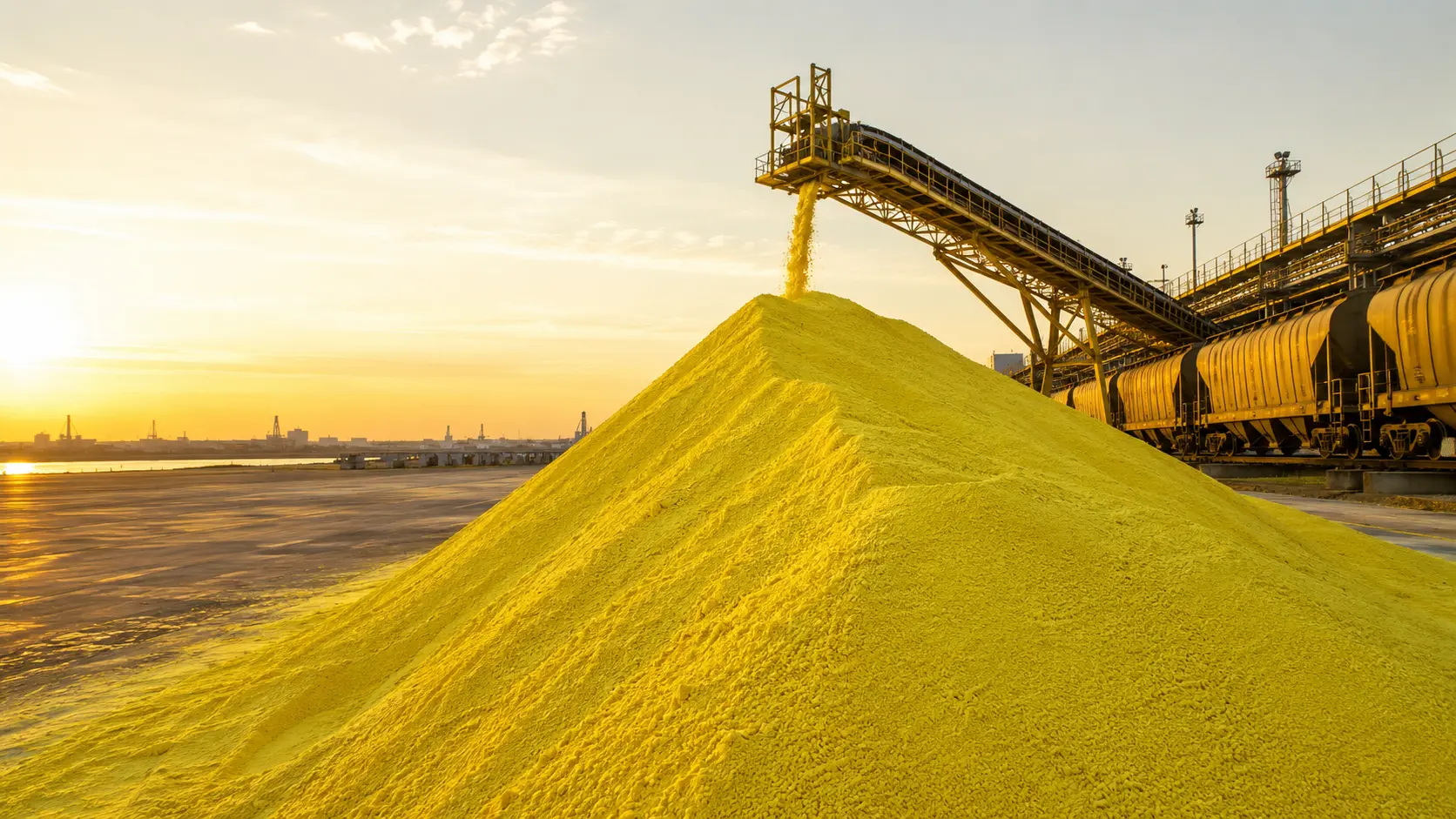
Sulfur (S, atomic number 16) is a strategic feedstock because most commercial demand is linked to sulfuric acid for phosphate fertilizers, metals processing and chemical manufacturing.
Most modern commercial sulfur is recovered from hydrogen sulfide removed during sour-gas processing and petroleum refining. Product form and handling quality matter alongside chemical purity.
From sour gas to saleable sulfur
- Acid-gas removal and amine regeneration
- Thermal Claus stage: controlled oxidation and sulfur formation
- Catalytic conversion, condensation and tail-gas treatment where installed
- Molten-sulfur degassing and filtration
- Granulation, prilling, pastillation or block solidification
- Lot sampling, laboratory release and protected storage

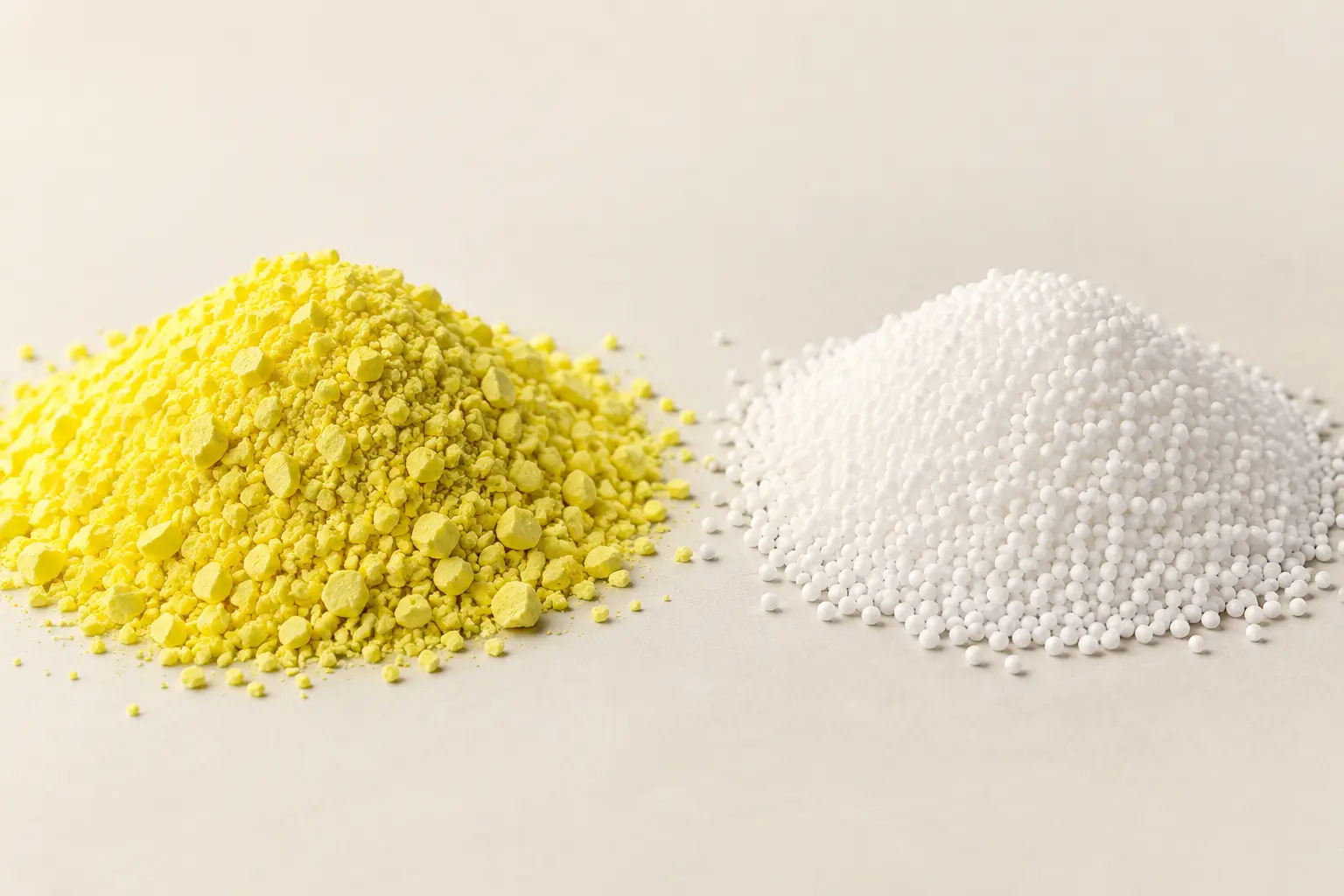
Commercial forms are not interchangeable
Parameters to define on the cargo COA
Sulfur purity
Effective sulfur content, but never the only quality measure.
Moisture
Affects weight, caking and handling.
Ash / carbon / acidity
Influences melting, filtration, corrosion and residue.
Particle-size distribution
Controls flow, dust and buyer acceptance.
Bulk density / friability
Affects stowage and particle breakdown.
Where sulfur creates value
- Sulfuric acid and phosphate fertilizers
- Metal leaching and mineral processing
- Rubber vulcanisation and chemical intermediates
- Sulfur-bentonite and formulated soil products—not identical to pure elemental sulfur
- Pulp, pigments and selected industrial processes
Packaging, inspection and shipment
- Bulk vessel for large parcels with confirmed port, loading rate and moisture controls
- 1 MT jumbo bags or 25–50 kg bags with liner, SWL, UV and stitching defined
- SDS, cargo-specific COA, TDS, origin, weight and transport documents
- Composite sampling across the lot or during loading, with sealed retained samples
- FOB/CFR/CIF plus exact port, Incoterms® 2020, laycan and quality finality
Red flags before payment
- Calling granular and prilled the same product
- Purity-only offer without moisture, ash, acidity or physical specification
- COA without lot number, date or agreed test method
- Stock photos presented as proof of current inventory
- Plant capacity presented as free export allocation
- CFR price without a current workable freight indication
- No dust, H₂S, fire or contamination controls in storage and loading
Educational procurement guidance. Current supplier TDS/SDS, cargo-specific COA, contract, port rules and applicable law govern every shipment.
Technical, market and shipment analysis
Global supply and Iran’s position
Recovered sulfur supply follows sour-gas processing and refinery throughput rather than sulfur demand alone. Canada, China, Russia, Saudi Arabia, Kazakhstan, the United Arab Emirates, Qatar and Iran are important producing origins, while actual export availability changes with plant operations, domestic allocation, sanctions, logistics and port acceptance.
- Separate country production from freely available export stock.
- Verify producer, stock location, origin and loading window before treating an offer as firm.
Demand centres and buyer segmentation
Sulfuric-acid and phosphate-fertilizer chains dominate demand. Metals leaching, chemicals, rubber and formulated agricultural products create additional but specification-sensitive demand. Import patterns can change quickly with fertilizer economics, smelter output and freight.
- India, China, Morocco, Indonesia and other fertilizer or metals-processing markets are major demand references.
- Destination demand does not prove that every origin, form or payment channel is workable.
Sampling, inspection and acceptance
A certificate is only as reliable as the sample behind it. Large lots should use an agreed sampling plan across the stockpile or loading stream, composite preparation, sealed retention samples and a named laboratory.
- Define lot, increment count, sample custody and test methods.
- State whether quality is final at load port or discharge port and how disputes are resolved.
Storage, HSE and cargo care
Solid sulfur is combustible; fine dust can create fire or explosion hazards, and molten or freshly handled sulfur may release hydrogen sulfide. Keep ignition sources controlled, avoid incompatible contamination, maintain ventilation and follow the current SDS and terminal rules.
- Protect solid product from water, mud, hydrocarbons and cross-contamination.
- For bulk shipment, agree hold cleanliness, loading rate, trimming, ventilation and discharge method.
Documents and Incoterms
A workable file normally includes commercial invoice, packing list, origin evidence, transport document, weight certificate, batch COA, TDS/SDS and any destination-specific certificate. Incoterms allocate delivery tasks and risk; they do not replace payment, title, quality or sanctions clauses.
- Name the exact load and destination port, Incoterms 2020 rule and laycan.
- For CFR/CIF, confirm current freight, exclusions, free time and insurance scope where applicable.
Price formation and offer validation
Sulfur prices depend on form, origin, parcel size, stock location, bagging or bulk, inland haulage, port cost, freight, inspection, payment risk and quotation validity. A low headline price without verifiable logistics is not a comparable offer.
- Compare offers on the same Incoterm, port, quality basis and shipment window.
- Treat market figures as dated references, not guaranteed executable prices.
Frequently asked questions
Is 99.9% purity enough to buy sulfur?
No. Basis, moisture, ash, acidity, carbon, particle size, fines and sampling can materially affect usability and delivered value.
Granular or prilled?
Neither is universally better. Confirm strength, size distribution, fines, discharge system and the buyer’s process.
Is sulfur bentonite the same as elemental sulfur?
No. Sulfur-bentonite is a formulated fertilizer designed to disperse in soil.
What makes a strong RFQ?
Form, quantity, full specification, basis and methods, packing, destination, Incoterm, inspection, laycan and payment procedure.
Primary references
USGS — Mineral Commodity Summaries 2026: SulfurU.S. EPA — AP-42 Section 8.13: Sulfur RecoveryOSHA — Combustible Dusts technical manualICC — Incoterms® 2020 rulesRoyal Society of Chemistry — Sulfur element dataDownload the complete Persian publicationRequest sulfur with a complete specification
Send form, purity basis, impurity limits, PSD, quantity, packing, destination, laycan and inspection requirement.
Request a quote